
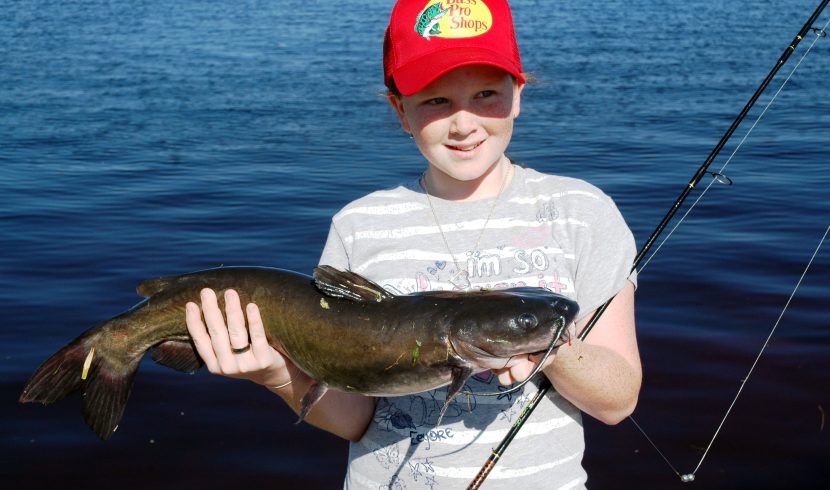
Many people probably started fishing by dangling bait under a bobber to catch channel catfish as their first fish. Unfortunately, many people “grow out” of catching channel cats as they move on to other things, but channel cats can still provide outstanding sport for even the most experienced anglers of all ages.
One of the most abundant and widespread gamefish in North America, channel catfish live in practically all freshwater systems across Alabama. Native to the Cotton State, they occupy the major rivers, like the Tennessee, Tombigbee and Alabama-Mobile systems as well as most lakes.
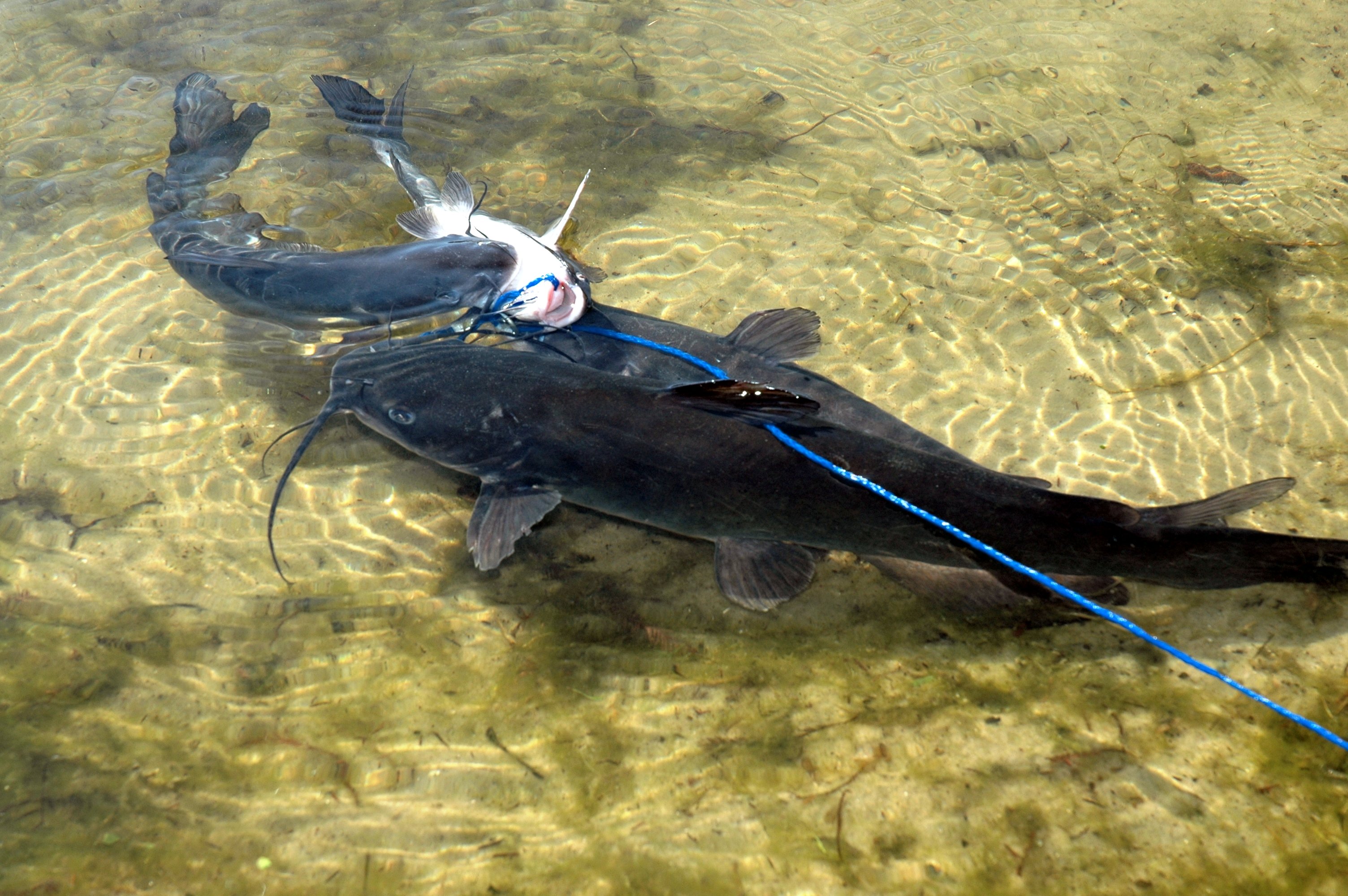
“Channel cats can be found almost everywhere,” advised Brian Barton, a Tennessee River guide (256-412-0969, www.brianbartonoutdoors.com) from Muscle Shoals. “If a person catches a channel catfish, there are probably multiple fish in that spot. Channel cats tend to like shallower water than blue cats and usually seek out shoreline structure, like logs, stumps, weed beds and rock piles.”
The whiskerfish look very similar to blue cats, but don’t reach such gigantic sizes as their larger cousins. Both blue and flathead catfish can exceed 100 pounds. Channel catfish typically run in the one- to five-pound range, but can top 50 pounds.
The Alabama state record weighed 40 pounds. Donald R. Cox pulled that fish from Inland Lake, a 1,557-acre lake about nine miles south of Oneonta. The lake dates to 1939 with the competition of a dam on the Blackburn Fork of the Little Warrior River in Blount County.
Countless people catch channel cats with one of the simplest forms of fishing. They dangle nightcrawlers or other baits under a float. Toss it next to a stump, fallen log or grassy patch and wait for the float to disappear. Drop-off edges also make great places to toss a bait.
Also, try a bottom rig for deeper fish, especially during warmer months. Remove the float and add a sinker. Toss the bait to a likely spot and wait for something to tug on the line. Some people hold the rod. Others anchor it and watch for the tip to start dancing. Use just enough weight to keep the bait in place.
Fortunately for fishermen, channel catfish might eat just about anything they can swallow. That’s makes them outstanding targets for novice anglers and children. Some excellent baits include crickets, shrimp, nightcrawlers, crawfish, minnows, fish pieces, catalpa worms, clams, dough balls, cheese, livers, gizzards and commercial stink or blood baits plus many other temptations.
“Channel cats are not shy about biting,” Barton commented. “If they’re in an area they are going to bite. Channel cats have a taste for stinky, smelly baits. This is why blood- and cheese-based prepared baits are so effective. In general, the more it smells, the better channel cats like it. A pile of shad guts is my favorite catfish bait. I also use chicken livers, slightly spoiled shrimp, cut bait and nightcrawlers.”
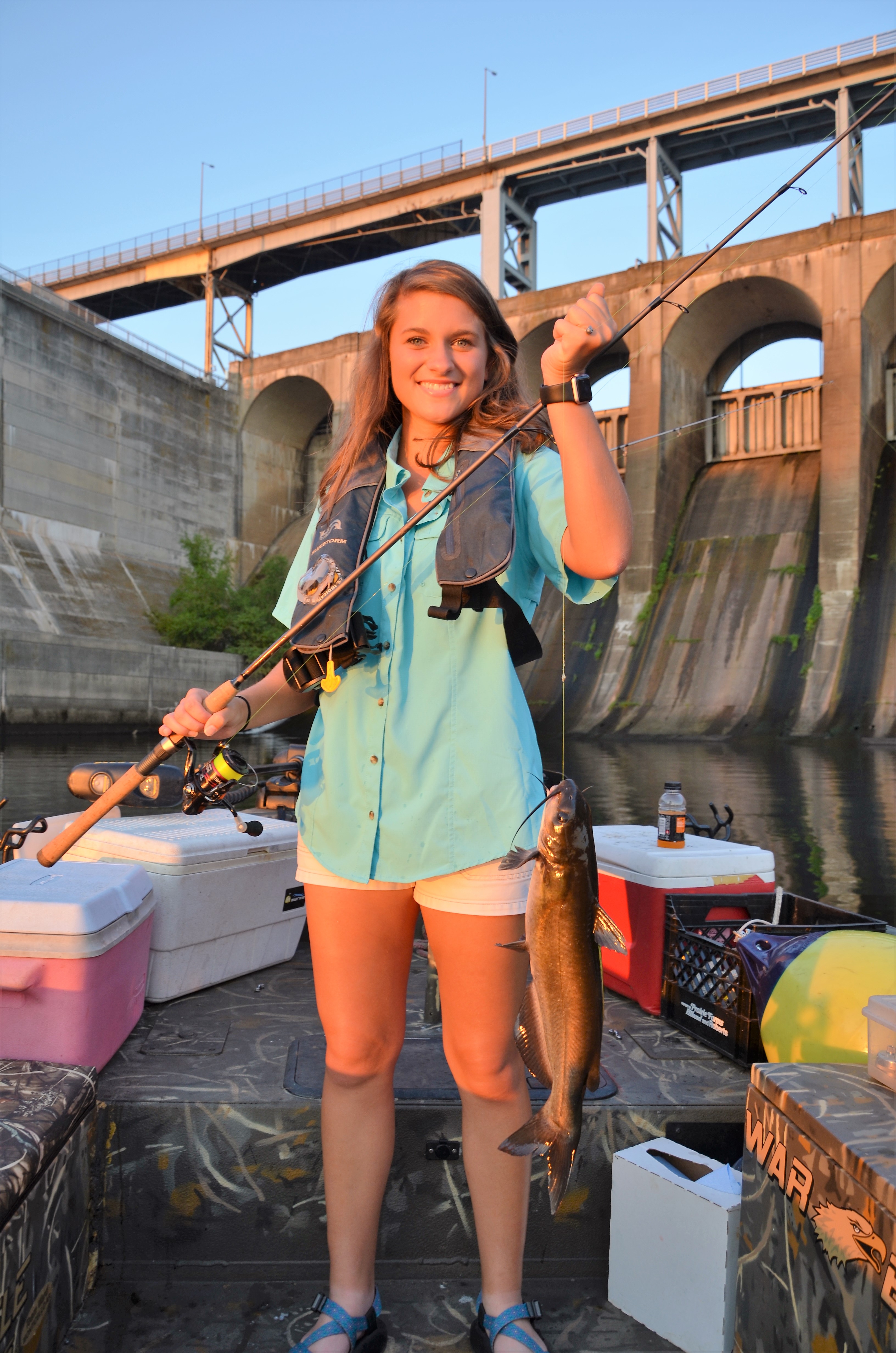
With thousands of taste buds per square inch in its skin, a catfish can detect minute food particles or scents over long distances, even in the muddiest, darkest conditions. Catfish sensors can distinguish odors down to one part in 10 billion parts of water.
Catfish can even detect prey with tiny natural “scanners” in their heads. Every living cell emits a minute electrical field. Catfish use their electrosensors to detect prey at night or in muddy water. They can also acutely sense sound waves far better than most fish. With such highly tuned sensing abilities, catfish might not take a bait, but will definitely know where it is.
To cut down on bait costs, some people catch or make their own. A minnow trap baited with bread could produce exceptional live bait. Some people scoop crawfish, grass shrimp and other morsels from ditches, small streams or weed beds in lakes and rivers. Shad or other small fish chunks make superb cut bait. Some people keep small fish from previous trips to use as catfish bait. Hunters freeze kidneys, hearts, livers, gizzards and entrails from their kills to use for future catfish bait or chum.
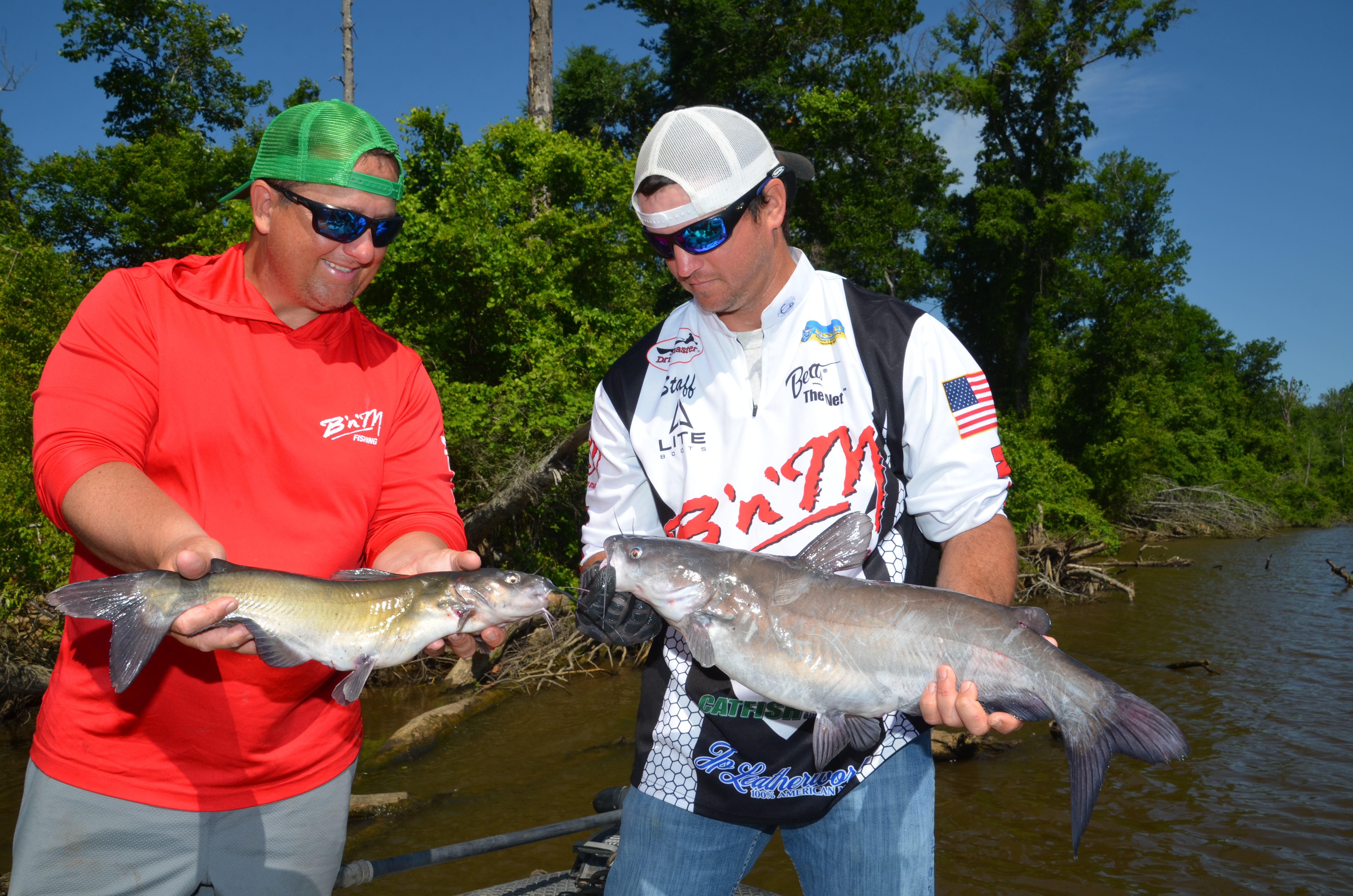
Chumming can concentrate catfish in a small area. Toss pieces of liver, oily canned dog food, blood or animal entrails into the water. Puncture holes in cans of cat food or cheap tuna. Tie on a line and drop the cans over the side of a boat or off a pier for attractant. To catfish, the meat and fluids oozing from the cans work the way smelling good barbecue on the grill gets me hungry. Add just enough chum to flavor the water and keep catfish interested, but not feed them. Then, offer them a succulent piece of bait with a hook in it.
Channel catfish normally prefer natural baits, but occasionally hit lures. Bass anglers sometimes catch cats on spinnerbaits, crankbaits, plastic worms or jigs. Barton likes to sweeten a weedless spoon with a fish strip. He works it slowly through cover where other tackle would probably snag. The wobbling spoon gives off vibrations and resembles a live fish. The strip gives off tempting scent.
“All catfish have predatory instincts,” Barton explained. “With the combination of the spoon and the bait, it’s a one-two punch. The fish sees the flashing spoon and feels the vibration. It also smells the meat. With a spoon, I can cover a lot more water than with just bait. The spoon makes a better weedless application than just a hook, sinker and bait rig.”
Some of the best channel catfish action in Alabama occurs in the 23 small public fishing lakes in 20 counties across the state. The lakes range in size from 13 to 184 acres for a total of 1,912 surface acres. The state regularly stocks the lakes with channel catfish and other fish species.
“We stock channel catfish every winter in our public fishing lakes,” detailed Tommy Purcell, the Alabama Wildlife and Freshwater Fisheries Division district fisheries biologist in Spanish Fort. “They’re catchable size when we stock them.”
For more information on Alabama public fishing lakes, see www.outdooralabama.com/where-fish-alabama/alabama-public-fishing-lakes-pfls.
An avid sportsman, Felsher is professional writer, photographer and radio show host who has written thousands of articles for many publications. He’s always looking for ideas or outdoors adventures that will make good stories. Contact Felsh at [email protected] or through Facebook. He also hosts an outdoors tips show for WAVH FM Talk 106.5 radio station in Mobile.