
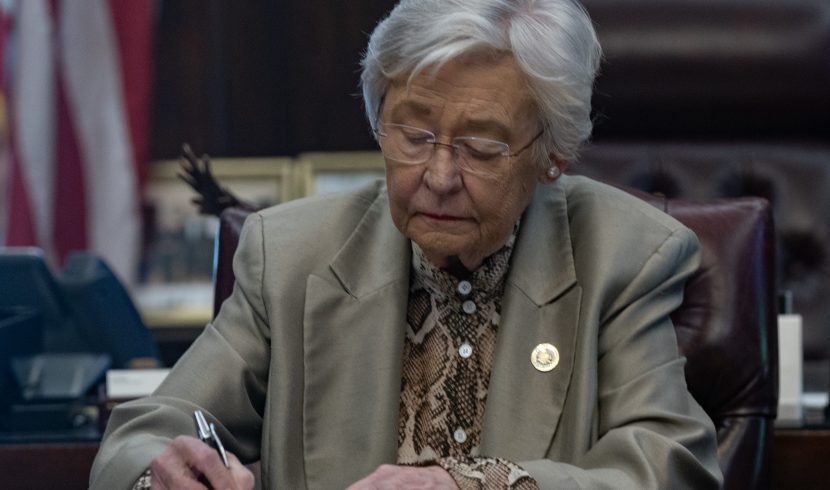
MONTGOMERY, Ala. — Alabama Gov. Kay Ivey last week signed off on 33 bills and two resolutions, officially marking the end of the 2025 legislative session.
The bills ranged from measures to expand services covered by Medicaid to extending the ability of state law enforcement agencies to wiretap for drug crimes.
In total, Ivey signed into law 287 bills and 147 resolutions this year, with every bill originating from her office reaching her desk for final approval. Nearly 1,500 bills in total were filed this year by state lawmakers.
✍️: The last of the bills on my desk today have been signed, and the 2025 Regular Session of the Alabama Legislature is officially a wrap! #alpolitics pic.twitter.com/hW1vMAyFo9
— Governor Kay Ivey (@GovernorKayIvey) May 21, 2025
Of the 33 bills Ivey signed last week on May 21, 13 were local bills pertaining only to specific counties. The 20 statewide bills are:
- Increases seafood dealer license fees and directs a portion of proceeds to promote Alabama seafood through Sweet Grown Alabama, the state’s nonprofit agricultural branding program.
- Requires the Alabama Medicaid Agency to cover certain noninvasive colorectal cancer screening tests and follow-up colonoscopies after positive test results, set to be repealed on Oct. 1, 2027.
- Expands the powers of county housing authorities by allowing them to form new business entities, and exempts them from certain taxes and liabilities.
- Amends Alabama’s wiretap law to indefinitely extend law enforcement agency’s ability to wiretap Alabamians suspected of certain felony drug offenses.
- Expands the Alabama Small Estates Act to streamline and clarify procedures for summary distributions of estates and adjust thresholds based on the Consumer Price Index.
- Imposes taxes on heated tobacco products and cigarettes and regulates their sale and transport.
- Establishes the Alabama STEM Council within the newly-rebranded Department of Workforce to improve STEM education, workforce development and career awareness.
- Prohibits Alabama state agencies from killing, testing or restricting the transfer of captive deer owned by licensed game breeders due to disease, with some exceptions.
- Prohibits health insurers from penalizing or restricting health care providers and pharmacists from sharing information with patients about treatment costs or alternatives treatments.
- Requires jail officials to verify the immigration status of arrested individuals, and establishes the crime of human smuggling for transporting an undocumented immigrant into the state, with some exceptions for health care providers and attorneys.
- Allows for nursing mothers to be excused from jury service for up to 24 months upon request, known as Parker’s Law.
- Updates Alabama’s expungement procedures by extending the objection response period, and reaffirms expungement decisions as being at the discretion of courts.
- Raises the minimum age for minors to be able to independently consent to most medical and mental health services from 14 to 16.
- Creates the crimes of mail theft and receiving stolen mail and establishes escalating penalties for said crimes.
- Prohibits individuals from operating motor vehicles on land submerged in water that is considered non-navigable, and establishes escalating criminal penalties for violations.
- Regulates businesses advising or assisting with veterans benefits claims by requiring them to possess certain accreditation, provide written disclosures, charge reasonable fees, and bans deceptive guarantees or referral payments.
- Creates the Joint Interim Study Commission on PTSD in First Responders to examine how to better support first responders with PTSD, with a final report due during the 2026 legislative session.
- Encourages the Alabama Growth Alliance to develop the Alabama Rural Roadmap, a strategic plan to address infrastructure, business growth, workforce training, quality of life and health care in rural communities, with a final report due during the 2026 legislative session.